.webp)

Heel Pain in the Morning? The #1 Cause We See in Lakewood, CO (and What Actually Works)
Heel pain in the morning? Here’s what it usually means in Lakewood, CO
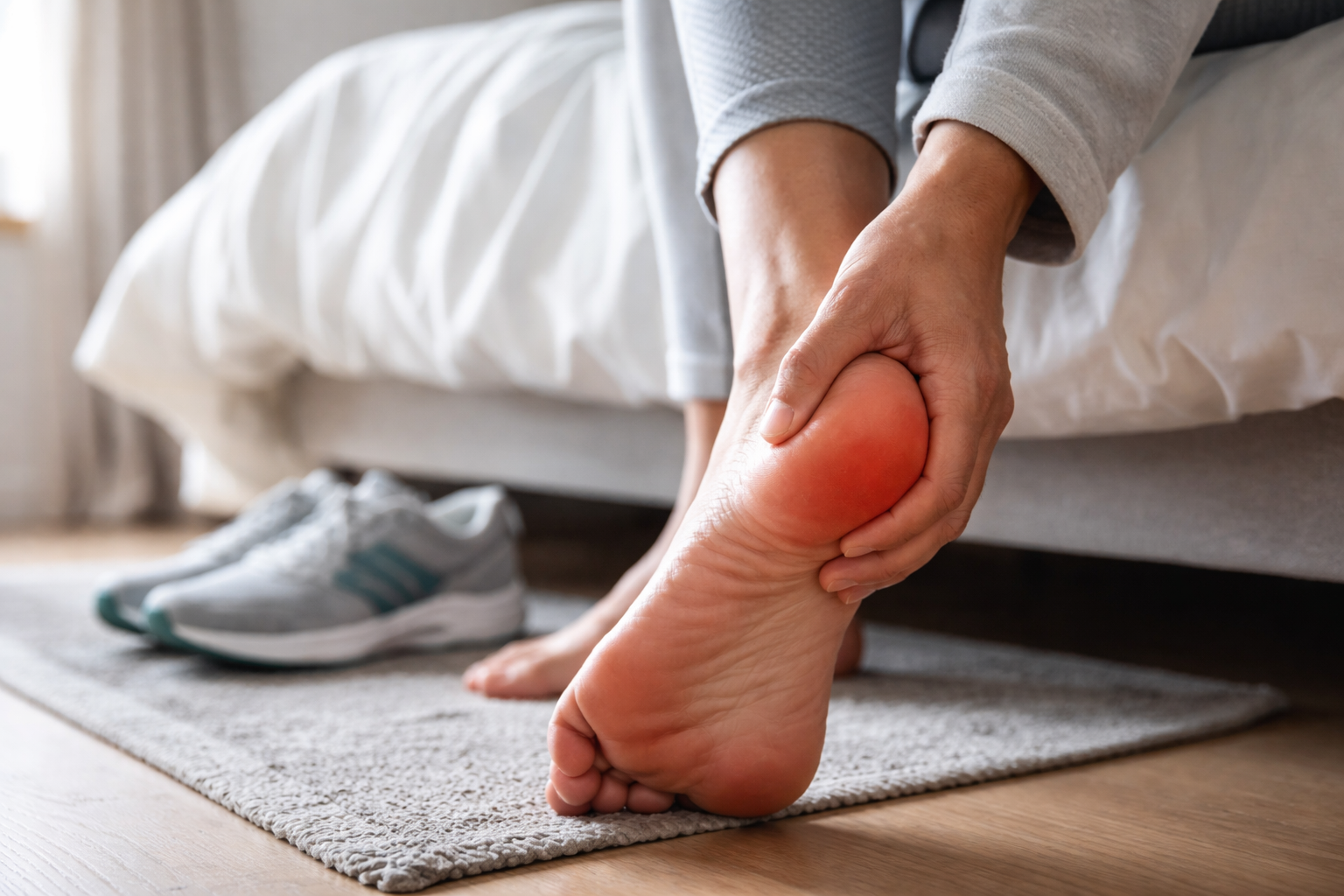
If your heel hurts most with the first steps in the morning, you’re describing one of the most common patterns we see. Often this is plantar fasciitis (more accurately, plantar fasciopathy)—and when it’s treated early and correctly, it often improves rather quickly.
If your heel pain has lasted more than 2–3 weeks, you’re limping, or it’s getting worse, book an evaluation. The biggest mistake we see is losing months treating the wrong thing.
Schedule a focused heel pain exam so we can confirm the cause and give you a simple plan that actually fits your foot mechanics and lifestyle.
The most common cause of morning heel pain: plantar fasciitis
The plantar fascia is the thick band of tissue that supports your arch. When it gets overloaded and irritated, it often behaves in a predictable way:
- sharp pain with the first steps out of bed
- pain after sitting, then standing again
- it may “warm up” after a few minutes, then flare later in the day
People often blame a “heel spur,” but the real driver is usually tissue overload + mechanics + footwear
The easiest things to do at home (start today)
If your symptoms match the “first steps” pattern, start with these for 1-2 weeks. They’re simple, but they matter.
1) Upgrade your shoes
This is the fastest win for many people with heel pain.
Look for:
- a firm heel counter (back of the shoe doesn’t collapse)
- stable midsole (not overly soft)
- supportive arch feel (not mushy)
Avoid during a flare:
- barefoot walking on hard floors
- flimsy slip-ons or flats
- old running shoes with a compressed heel
2) Stretch your calves (not your arch)
Aggressively stretching the bottom of the foot can irritate it.
When heel pain is NOT plantar fasciitis (and why an exam matters)
Not all heel pain is the same, and the “wrong” plan can drag this out for months. Other common causes include:
- heel fat pad pain
- Baxter’s nerve irritation
- calcaneal stress fracture
- Achilles insertion pain
- Calcaneal bone cyst
A focused exam helps sort this quickly and prevents wasted time.
When to see a Denver foot and ankle specialist for heel pain
If you’re searching “podiatrist for heel pain near me,” these are the practical triggers to come in:
- pain lasting > 1-2 weeks
- limping or changing how you walk
- pain that is worsening, not stabilizing
- numbness, tingling, burning
- sudden pain after a big increase in activity
- history of stress fracture, osteoporosis, inflammatory arthritis
- diabetes or neuropathy
We commonly see patients from Wheat Ridge, Arvada, Golden, Lakewood and Denver who tried “a little of everything” and still aren’t improving—usually because the diagnosis or mechanics weren’t nailed down.
Do you need an X-ray or MRI for heel pain?
Often, we start with a clinical exam and sometimes an X-ray to rule out bony issues and evaluate alignment. Advanced imaging (MRI/ultrasound) is usually reserved for:
- atypical symptoms
- lack of improvement with appropriate care
- concern for stress fracture, tear, or nerve-related pain
What we do in-office for plantar fasciitis and heel pain
If home steps aren’t moving the needle, treatment should match your mechanics and goals. Options may include:
- detailed biomechanics evaluation and gait exam
- Shoe and boot evaluation
- targeted physical therapy plan
- supportive inserts or custom orthotics based on your foot type
- short-term immobilization for severe flares
- selective injection options when appropriate
- regenerative treatments for select chronic cases
The goal is durable relief and a plan that prevents recurrence—not a quick fix that rebounds.
Frequently asked questions
How long does plantar fasciitis take to heal?
Many cases improve in 4–8 weeks with the right treatment.
Should I keep walking if my heel hurts?
Usually yes, but reduce the trigger load and avoid “pushing through” sharp pain. Consistency beats intensity.
Is a heel spur the cause of my pain?
Usually no. Heel spurs are common and often painless. Symptoms usually reflect plantar fascia overload and mechanics.
What are the best shoes for plantar fasciitis?
Stable heel counter + supportive midsole + cushioning. The best option depends on your foot mechanics and activity.
Heel pain treatment in Lakewood, CO
If you’ve had morning heel pain for a few weeks, or you want a clear diagnosis and a straightforward plan, schedule a heel pain evaluation with LEAP Foot and Ankle Specialists.
You’ll leave knowing:
- what’s actually causing the pain,
- what to do this week, and
- what to do next if it’s not improving.
Heading
Join our Newsletter


Lakewood, CO 80226

.svg)

%201.png)